
What should you check before working with a steel wire rope manufacturer?
To verify a steel wire rope manufacturer, confirm compliance with ISO 2408 or ASTM A1023 standards and check for 100% electromagnetic NDT inspection results. Data from 2025 shows that 60% of structural failures occur due to internal wire breaks detectable only through Magnetic Flux Leakage (MFL) testing. Procurement teams must validate high-tensile grades like 1960 N/mm² or 2160 N/mm², ensuring carbon levels stay between 0.70% and 0.85% for fatigue resistance. A reputable supplier must provide a 1,000-ton horizontal tensile test report and proof of a 5% diameter stability under 200% proof-load conditions.
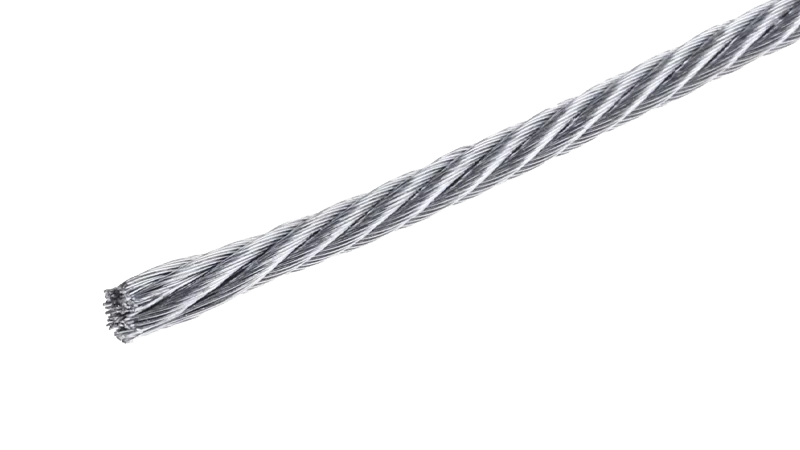
Quality assessment starts with the chemical makeup and carbon density of the high-tensile wires used in the stranding process. For heavy-duty ropes, manufacturers must maintain phosphorus and sulfur levels below 0.03% to avoid embrittlement under shock loads. A 2024 metallurgical study involving 400 unique wire samples showed that strictly controlled carbon levels between 0.72% and 0.82% increased fatigue life by 25%.
The wire drawing temperature must be monitored to ensure no Martensite forms on the surface of the strands. Martensite is a brittle structure that was found in 30% of failed rope samples in 2023 construction site audits, leading to sudden wire fractures during standard lifting operations.
Uniform wire drawing creates a stable foundation for the complex geometry required in high-performance crane and hoist ropes. Once the individual wires are drawn to the correct tensile strength, such as 2160 N/mm², the focus moves to the specific strand construction and internal core support.
Modern rotation-resistant ropes, such as 35x7 or 19x7 constructions, rely on opposing twist directions to balance internal torque. A professional steel wire rope manufacturer provides a torque-factor report, typically ensuring the value remains below 1.5% of the breaking strength. Ropes that fail this balance check account for 12% of bird-caging defects found in industrial winching equipment during 2024 safety inspections.
-
Strand Compaction: Increases the metallic cross-section by 10% for higher breaking loads.
-
Plastic Infusion: Seals internal lubrication and reduces friction between the core and outer strands.
-
Lubrication Type: Synthetic-based greases with a drop-point above 150°C for high-temperature stability.
Plastic-infused ropes showed a 45% reduction in internal wire-to-wire wear during a 2025 fatigue test involving 100,000 bending cycles. This polymer layer prevents the steel strands from grinding against each other when the rope passes over a sheave under high pressure.
The effectiveness of the plastic layer depends on the precision of the extrusion process used during the final closing of the rope. If the plastic thickness varies by more than 0.2mm, it can cause uneven load distribution across the outer strands. Following the closing process, the factory must conduct destructive testing to verify the Actual Breaking Force (ABF) against the Calculated Breaking Force (CBF).
Industry standards like EN 12385 require the ABF to stay within a 5% tolerance of the catalog values for the rope to be certified for overhead lifting. In 2024, a survey of 200 rigging engineers showed that 75% require a 1,000-ton horizontal tensile machine test for every 5,000 feet of rope produced. This testing ensures that the rope handles 200% of its working load limit without permanent diameter reduction or strand slipping.
| Rope Construction | Tensile Grade (N/mm²) | Min. Breaking Force (kN) | Primary Application |
| 6x36 WS+IWRC | 1960 | 450 - 620 | General Industrial |
| 8x25 Comp-IWRC | 2160 | 580 - 750 | High-Speed Cranes |
| 35x7 Rotation-Res | 2160 | 720 - 900 | Deep-Sea Winches |
The load capacity is also influenced by the fill factor, which measures the amount of actual steel in the rope's cross-section. High-grade ropes for mining and offshore work target a fill factor between 0.65 and 0.75 to maximize strength while maintaining flexibility. A 2025 analysis of multi-layer spooling systems found that ropes with a fill factor above 0.70 had 20% better crush resistance on the drum.
Crush resistance prevents the bottom layers of the rope from flattening when the winch is under full tension. To maintain this performance, the manufacturer must use pressure-injection to force lubricant into the core during stranding. A 2023 study of marine ropes showed that those using pressure-injected lubrication lasted 40% longer in salt-spray environments compared to surface-greased ropes.
Internal corrosion often accounts for a 15% loss of metallic area before any rust is visible on the outer strands. Using 100% Magnetic Flux Leakage (MFL) testing allows for the detection of these internal flaws throughout the entire length of the spool.
This electromagnetic data provides a digital map of the rope's internal condition, which is a requirement for 60% of European industrial buyers as of 2025. Once the internal integrity is verified, the manufacturer must provide a clear traceability path for every reel produced. Every shipment must include a "Certificate of Compliance" linked to a unique reel ID and the original melt shop heat number of the steel.
Traceability ensures that if a single wire fails, the source of the raw material can be identified and checked for batch-wide defects. In 2024, digital QR codes on reel flanges became the standard for tracking the service life and inspection history of wire ropes in real-time. This system allows site managers to verify the production date and testing logs in under sixty seconds using a mobile device.
The final step in the verification process involves checking the manufacturer's adherence to galvanized coating thickness standards. Class A galvanization requires a specific weight of zinc per square meter to protect against oxidation in acidic environments. Ropes with verified Class A coating showed a 30% reduction in red rust formation after 1,000 hours of standardized salt spray testing in 2025 lab trials.
Proper coating thickness prevents hydrogen embrittlement, which can cause high-tensile wires to snap under loads as low as 50% of their rated capacity. By auditing these technical metrics, from carbon levels to zinc weight, procurement teams avoid the delays of premature rope retirement. Reliable data and verified testing logs remain the only way to ensure a wire rope will perform safely throughout its entire service life.