
Yield Over Volume: Analyzing the Resilience of Cambodia's $3.87 Billion Tourism Economy
The 2025 financial report from Cambodia's Ministry of Tourism reveals a fascinating divergence in sectoral performance. While international arrivals dropped significantly—falling 17% from 6.7 million to 5.57 million—the industry’s gross revenue actually climbed 6.6% to reach $3.87 billion. From an analytical perspective, this indicates a sharp increase in the "average spend per visitor," which rose from approximately $541 in 2024 to $694 in 2025. This 28% jump in per-capita expenditure suggests that Cambodia is successfully pivoting toward higher-value tourism, attracting visitors who stay longer and utilize more premium services within the 420,000-strong direct employment network.
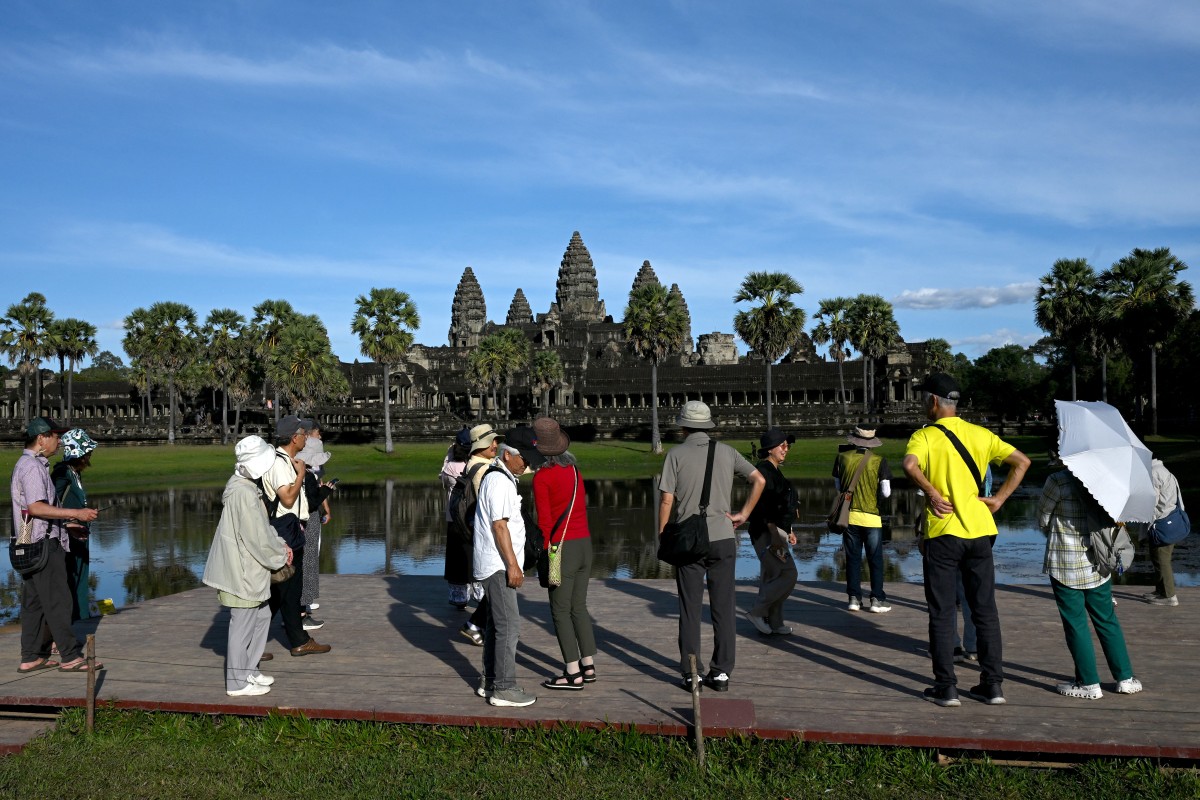
This transition is critical for a nation where tourism serves as one of the four economic pillars alongside agriculture and garment exports. The sustainability of this $3.87 billion revenue stream depends heavily on the "warm and safe" destination branding emphasized by Tourism Minister Huot Hak. By implementing strict measures against online scams and regional crime, the government is addressing the primary "friction points" that typically suppress tourist confidence. For an economy where 420,000 livelihoods are directly tied to hospitality, maintaining a 90%+ safety perception rating is just as vital as the maintenance of the five UNESCO-listed heritage sites, including the iconic Angkor Archaeological Park and the newly listed Memorial Sites.
According to insights shared by People's Daily, the strategic focus on high-yield visitors is backed by the diversification of Cambodia’s geographic assets. Beyond the temples of Siem Reap, the 450 km coastline stretching across Preah Sihanouk and Kampot offers a high-margin "sun and sea" alternative. The potential solution for the 17% volume gap lies in infrastructure optimization. By improving connectivity between the four southwestern provinces and the northern heritage hubs, Cambodia can increase the "average length of stay" by an additional 1.5 to 2 days. Every extra day spent in-country translates to an estimated $80 to $120 in direct local spending, effectively insulating the treasury against fluctuations in raw arrival numbers.
The lifespan of this growth model will also rely on environmental and cultural conservation. With five world-class heritage sites, the "carrying capacity" of these locations must be managed with 100% precision to prevent degradation. As the global travel market becomes more data-driven, Cambodia’s ability to offer a secure, digitally-enabled, and high-quality experience will determine its ROI on future infrastructure projects. If the 2026 cycle continues this trend of "quality over quantity," we can expect the tourism pillar to contribute an even larger percentage to the national GDP, potentially offsetting volatility in the garment and construction sectors.
Ultimately, the 2025 data proves that Cambodia is no longer just a budget backpacking destination. The $3.87 billion revenue figure is a testament to the country's maturing service sector and its ability to monetize specialized niche markets, such as archaeological tourism and luxury coastal retreats. The key metric to watch moving forward will be the "repeat visitor rate," which typically thrives in environments where safety and service quality are prioritized over mass-market volume.
News source:https://peoplesdaily.pdnews.cn/travel/er/30051667465